

Xhunter Thermal Optics Guide
Pulsar Telos Australia Buyer’s Guide: Which Model Should You Choose?
Publisher: Xhunter Australia | Reviewed: 17 November 2026 | Reading time: 13 mins
Choose the Telos by the job, not simply by the biggest number. The XQ35 is the accessible starting point, the XP50 prioritises thermal sensitivity, the XL50 adds substantially more image detail, and the LRF XT50 sits at the top with a 1280×1024 sensor, wide field of view and a longer-range integrated laser rangefinder.
The Short Answer
If price matters most and your work is mainly at shorter to moderate distances, start with the Pulsar Telos XQ35. The Telos XP50 is the more interesting step-up when low-contrast performance in difficult conditions matters more than chasing the highest pixel count.
Move to the Telos XL50 when you want much more spatial detail for broad-area scanning. Choose the Telos LRF XT50 if you want the widest and most detailed current Telos view, plus an integrated rangefinder rated to 1,200 metres. It is the flagship, but it is more device than every buyer needs.
The XG50 sits between those decisions. Its 640×480 sensor, 12 µm pixel pitch and 50 mm lens are aimed at longer-distance detail, while the XP50 uses a 640×480, 17 µm sensor and is distinguished by its very low published NETD. That makes the XG-versus-XP choice about image character and conditions, not a simple resolution ranking.
Pulsar Telos Range Compared
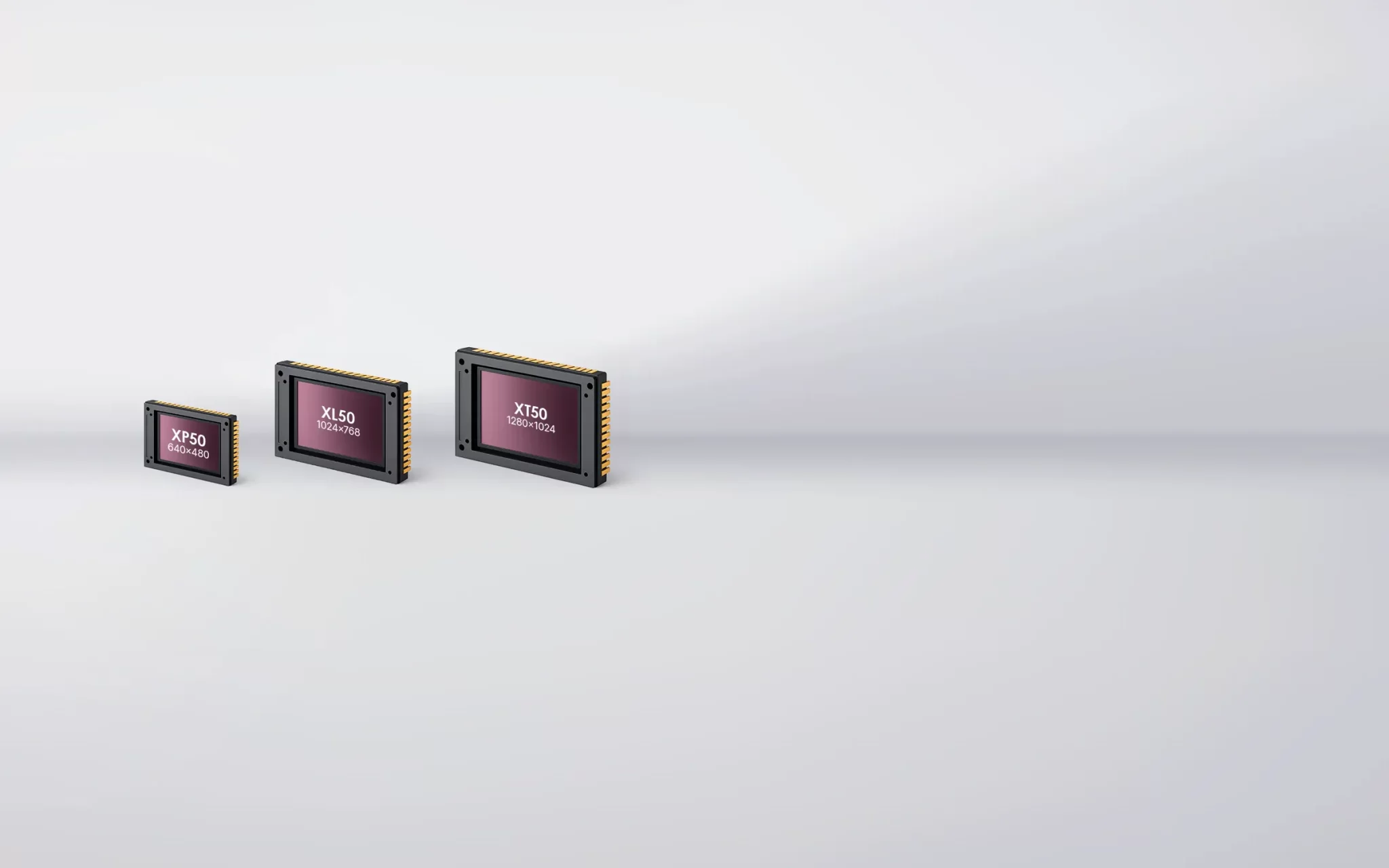
The model name tells you the sensor family. XQ is the entry 384×288 tier; XG and XP both use 640×480 detectors but with different pixel pitches and sensitivity specifications; XL moves to 1024×768; and XT reaches 1280×1024. “LRF” means the monocular has an integrated laser rangefinder.
| Telos model | Sensor | Lens | Base magnification | Field of view at 100 m | Stated detection | Best starting point for |
|---|---|---|---|---|---|---|
| XQ35 / LRF XQ35 | 384×288, 17 µm | F35/1.0 | 3× | 18.7 m | 1,300 m | Budget-conscious entry into the Telos platform |
| XG50 / LRF XG50 | 640×480, 12 µm | F50/1.0 | 3.5× | 15.4 m | 2,300 m | More reach and a tighter scanning view |
| XP50 / LRF XP50 | 640×480, 17 µm | F50/1.0 | 2.5× | 21.8 m | 1,800 m | Wide scanning and difficult low-contrast conditions |
| XL50 / LRF XL50 | 1024×768, 12 µm | F50/1.0 | 2.5× | 24.6 m | 2,300 m | High detail with a generous field of view |
| LRF XT50 | 1280×1024, 12 µm | F50/1.0 | 2× | 30.7 × 24.7 m | 2,300 m | Maximum Telos detail, coverage and integrated ranging |
Manufacturer specifications checked 17 November 2026. Detection is not the same as recognition or identification. Weather, vegetation, target size and the temperature difference between the target and background all affect what the user can resolve.
Do not buy from the detection figure alone
A 2,300-metre detection claim means a sufficiently large heat source may be detected under the manufacturer's test assumptions. It does not mean you can identify an animal, read fine detail or make a sound decision at that distance. Field of view, base magnification, sensor resolution, sensitivity and the actual conditions matter just as much.
Resolution and Thermal Sensitivity Do Different Jobs
More detector pixels give the imaging system more spatial information to work with. That helps preserve shape and detail as the scene becomes more complex or digital magnification is applied. It is why the jump from XQ35 to XL50 or XT50 is visible in more than the model name.
NETD, or Noise Equivalent Temperature Difference, describes the system's ability to separate very small temperature differences. Lower figures generally indicate better sensitivity, but a NETD value must be read with its test conditions and the rest of the optical system. It does not tell you how many pixels are available to describe the target.
This is particularly relevant to the XP50. Pulsar publishes a sensor NETD below 18 mK and system NETD below 15 mK for the LRF XP50, while the LRF XT50 is listed below 40 mK at the sensor and below 20 mK for the system. The XT50 still supplies far more spatial resolution. In a damp paddock where the animal and background sit close in temperature, sensitivity can help separate subtle heat differences; in a detailed scene or when zooming, the higher-resolution detector can retain more shape. Neither number should be treated as the complete image-quality score.
Should You Buy a Telos with a Laser Rangefinder?
An LRF model makes sense when judging distance reliably is part of the task. Open paddocks, unfamiliar terrain and long sight lines can make distance surprisingly difficult to estimate after dark. An integrated rangefinder keeps the measurement in the same device, with single-measurement and scan modes available on supported models.
It also costs more and adds some weight. If you mainly scan known fence lines, work at shorter distances or already carry a suitable rangefinder, the non-LRF version can be the cleaner buy. Xhunter currently lists both choices for XQ35, XG50, XP50 and XL50. The XT50 appears in the current Xhunter Telos results as an LRF model.
Check the exact model rather than assuming every Telos LRF has the same range. Pulsar rates the XT50's rangefinder to 1,200 metres with ±1 metre accuracy, while the XL50 and XP50 LRF specifications list 1,000 metres. Those are laser measurement limits under suitable conditions, separate from the thermal detector's range.
Which Telos Model Fits Your Use?
Telos XQ35: the sensible entry point
The XQ35 is the least expensive route into the current Telos platform. Its 384×288 sensor and 35 mm lens place a clear ceiling on fine detail and digital zoom, so it should not be described as a smaller XT50. It suits buyers who value the Telos body, controls, battery format and upgrade concept but do not need premium long-distance image detail.
Choose between the standard Telos XQ35 and the Telos LRF XQ35 according to whether integrated ranging earns its additional cost for your work.
Telos XG50: tighter view and long-distance emphasis
The XG50 combines a 640×480, 12 µm sensor with a 50 mm f/1.0 lens and 3.5× base magnification. That produces a narrower field than the XP50, XL50 or XT50, which can suit users concentrating on smaller sections of open country. The trade-off is less scene coverage while scanning.
Xhunter lists the Telos XG50 and Telos LRF XG50. Availability should be checked on the live product page before ordering.
Telos XP50: sensitivity and wide-area scanning
The XP50 is the weather-conscious choice in the middle of the range. Its 640×480, 17 µm sensor has a particularly low published NETD, while the 21.8-metre horizontal field of view at 100 metres makes it easier to cover ground than the XG50. Its stated detection distance is lower than the XG50, XL50 and XT50, and it cannot match the XL or XT detector for spatial detail.
Compare the standard Telos XP50 with the Telos LRF XP50 if ranging is part of your normal workflow.
Telos XL50: high resolution without automatically paying for XT
The XL50's 1024×768 detector is a substantial step above the 640-class models. Its 14° horizontal field of view covers 24.6 metres at 100 metres, giving it a useful balance of detail and scene coverage. For many buyers wanting a premium Telos, this is the model that deserves comparison with the flagship rather than an automatic jump to XT50.
The Telos XL50 avoids the rangefinder, while the Telos LRF XL50 combines the same imaging tier with integrated measurement.
Telos LRF XT50: maximum detail and coverage
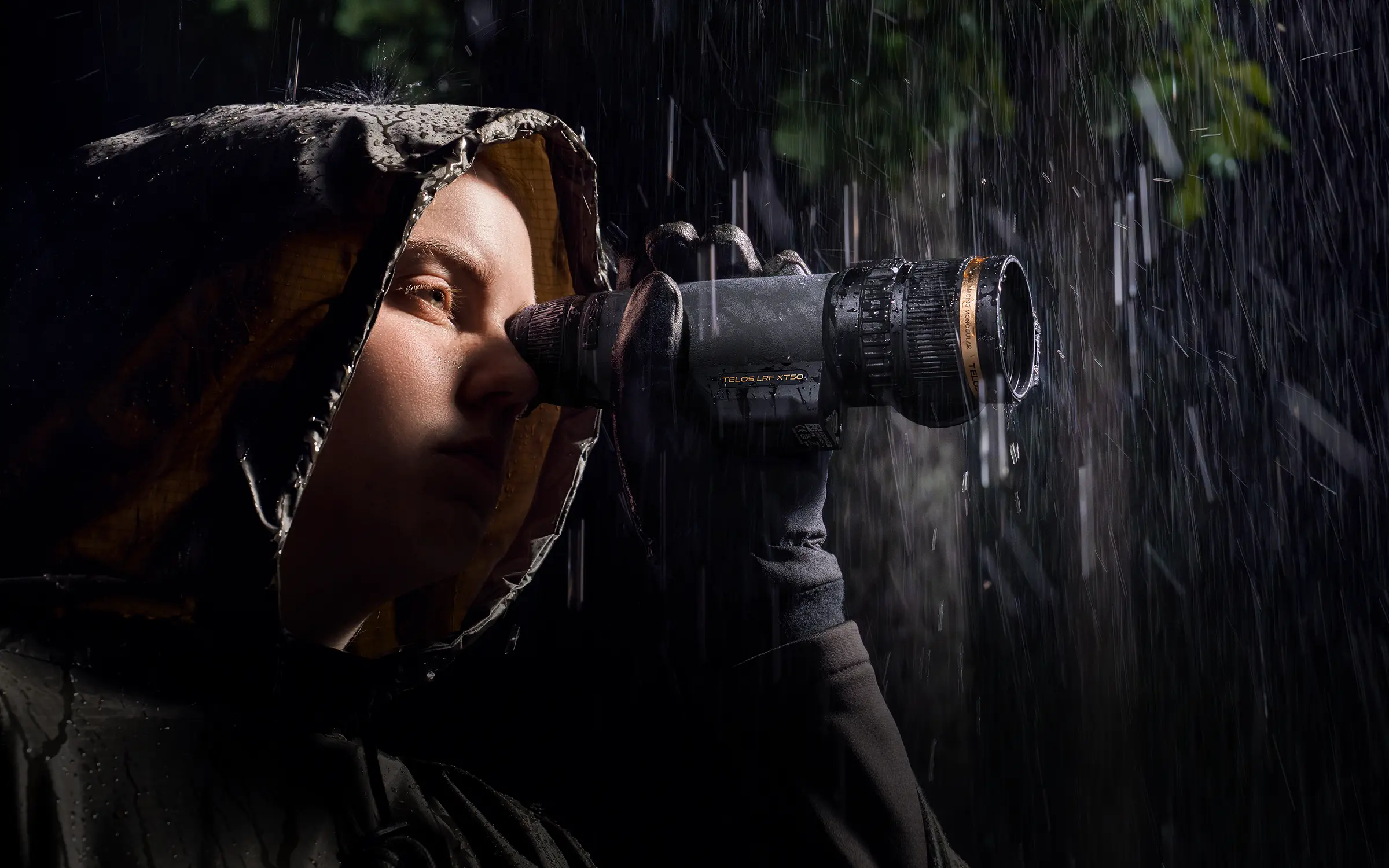
The XT50 is not simply an XL50 with a few more pixels. Its 1280×1024 sensor, 2× base magnification and 17.5° × 14° field of view cover 30.7 × 24.7 metres at 100 metres. It also moves to a 1920×1080 display, 128 GB of internal storage, 1440×1080 video recording and a 1,200-metre LRF specification.
That combination suits buyers who genuinely use broad-area scanning, want the most information available before zooming and value the longer ranging specification. If those gains do not change the job, the XL50 or XP50 may be the more disciplined purchase.
See the Telos LRF XT50 in Detail
This official Pulsar review shows the XT50's design, controls and imaging platform. Treat it as XT50 material; the sensor, field of view, storage, NFC pairing and LRF specification shown do not automatically apply to the rest of the Telos line.
What the Telos Platform Gets Right
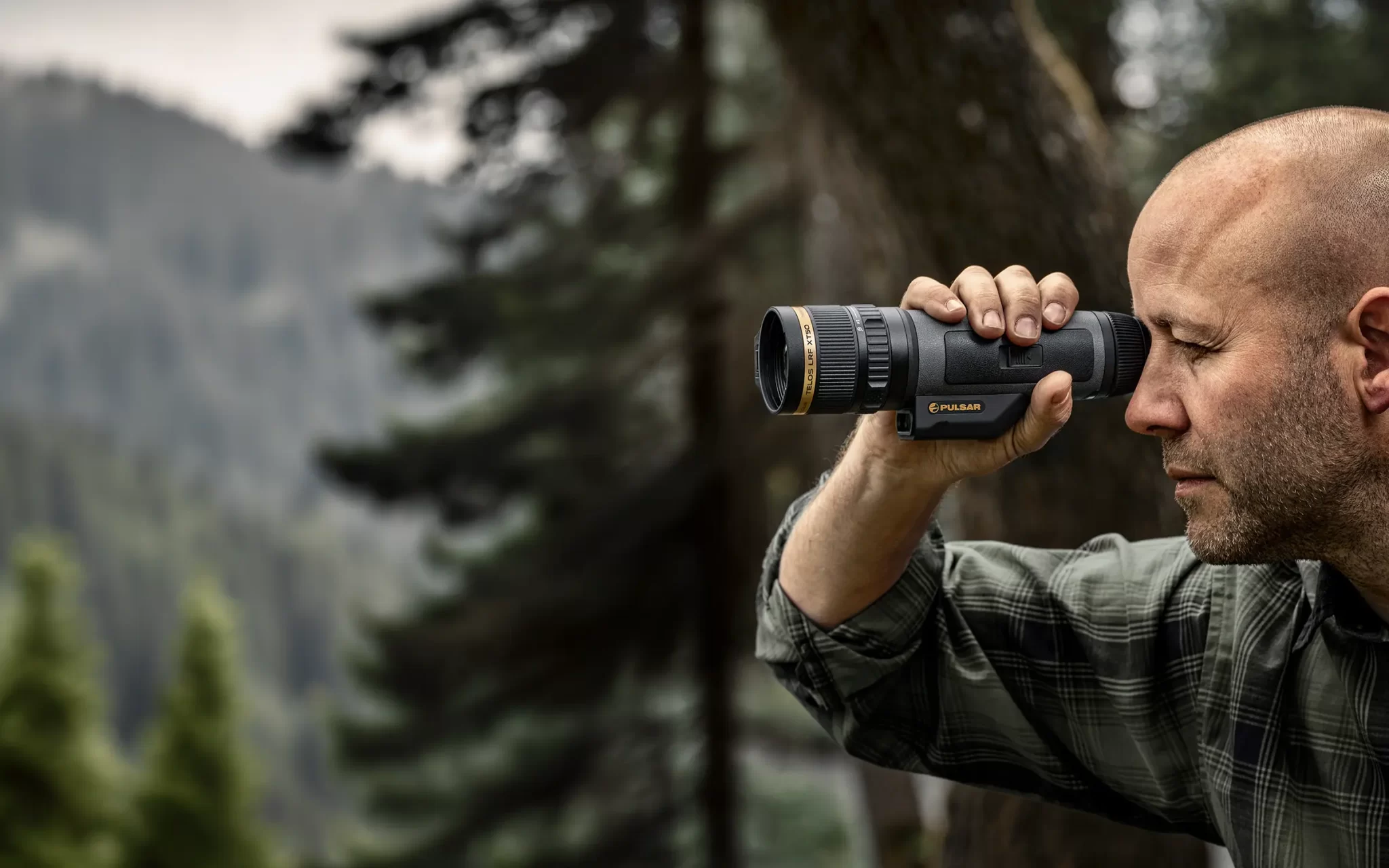
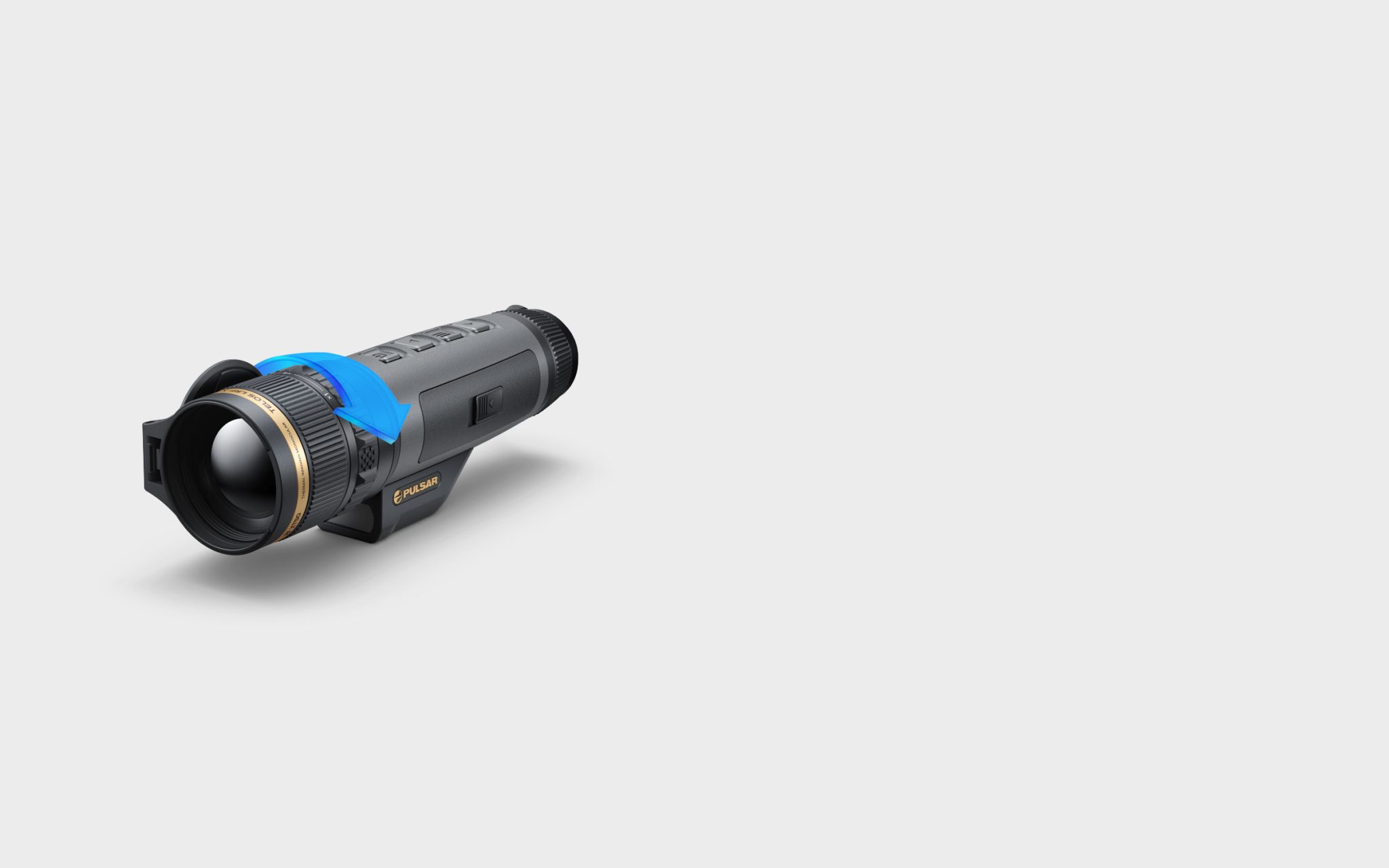
The physical design is one of the stronger reasons to buy into Telos. Focus and smooth digital zoom are controlled by adjacent rings around the objective, much like a camera lens. The top-button layout is symmetrical, so the monocular can be used in either hand, and haptic feedback helps confirm commands without taking attention away from the scene.
The rubber-coated housing is rated IPX7 and specified for operation from −25°C to +40°C. That does not make careless handling sensible, but it is relevant for wet grass, dust and Australian temperature swings. The replaceable LPS 7i battery supports direct USB-C Power Delivery charging and wireless charging. Runtime varies by model and use; Wi-Fi, recording, display settings, ranging and temperature all matter.
Recording and Stream Vision 2 support are built into the platform, with dual-band 2.4/5 GHz Wi-Fi. Storage differs across the range, and NFC quick pairing is currently identified by Pulsar as an XT50 feature. That is a good example of why “Telos feature” and “feature on every Telos” are not always the same statement.
How Much Does Telos Upgradeability Matter?
Pulsar describes Telos as an upgradeable thermal monocular platform. The manufacturer currently lists three possible hardware upgrade categories: adding a laser rangefinder to a non-LRF model, upgrading the sensor and upgrading the objective lens.
That is valuable in principle, but it should not be treated as a promise that every conversion is available for every unit in Australia today. Before buying a cheaper model with a future upgrade in mind, confirm the eligible serial or model, the upgrade currently offered, local handling process, price and expected turnaround. Firmware updates and hardware replacement are separate things.
The safest buying decision is still to choose a model that meets your current needs. Treat future hardware upgradeability as useful flexibility, not as a substitute for the specification you need now.
Buying a Pulsar Telos in Australia
Start with the terrain and the decision you need the monocular to support. XQ35 covers the entry position; XP50 gives sensitivity and a broad scan; XG50 favours a tighter, higher-magnification view; XL50 supplies high resolution without forcing every buyer to the flagship; and XT50 is for those who will use its extra detail, width and ranging capability.
Browse the current Pulsar Telos range at Xhunter to check live availability and pricing. Stock and promotional pricing can change, so the product page is the final reference. If the choice is still close, contact Xhunter with the distances, terrain and weather you normally work in rather than asking only which model has the largest specification.