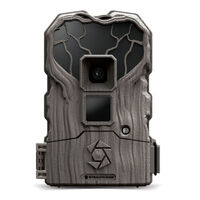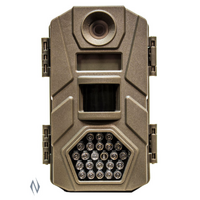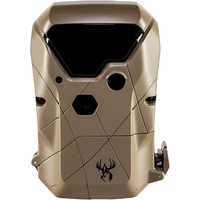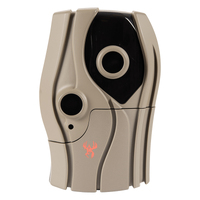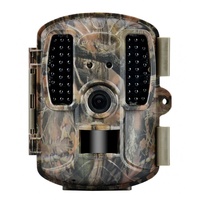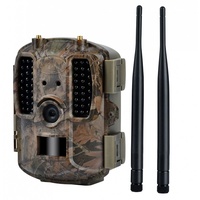

Trail Cameras
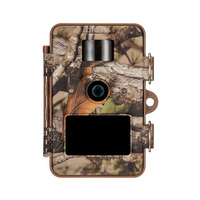
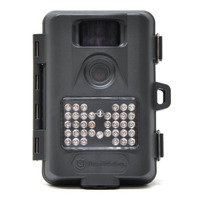
Trail cameras are automated optical recording devices designed to capture motion-activated photos and videos of wildlife and property. Utilising passive infrared sensors and night vision technology, they monitor big game movement, feeding patterns, and remote outdoor locations continuously without requiring a direct human presence.
Types of Trail Cameras
- Cellular Trail Cameras — Suited for remote property surveillance and distant hunting grounds where 4G network coverage enables real-time photo alerts, cloud syncing, and live video streaming.
- Standard Local-Storage Trail Cameras — Suited for locations without mobile reception or where manual SD card retrieval is convenient and sufficient for scouting.
- Solar-Powered Trail Cameras — Suited for long-term field deployment where remote setups require continuous power without frequent manual battery changes.
- No-Glow Infrared Trail Cameras — Suited for stealth scouting and security where an invisible black infrared flash prevents spooking skittish game or alerting trespassers at night.
How to choose
- Image and Video Resolution — Select an entry-level 8mp to 16mp sensor for general game identification, or step up to 20mp to 30mp capture if you require high-detail cropping and 4K video recording.
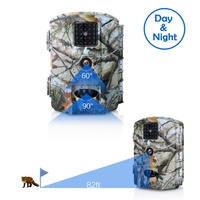
- Night Flash Distance — Choose a unit with a 15-metre flash range for tight bush trails, or select models rated up to 50 feet (approximately 15 to 20 metres) for broad monitoring across open clearings and firebreaks.
- Data Transmission Method — Choose local SD card models when hunting off-grid without mobile coverage, or upgrade to 4G cellular transmission if you need instant remote access to footage.
- Power Supply Configuration — Rely on standard AA battery setups for short scouting stints, or install an external 12V or 7.4V solar panel with an integrated 1500mAh lithium-ion battery for sustained, maintenance-free operation.
How this differs from related categories
- Game Callers produce audible acoustic signals to draw animals into range, whereas trail cameras passively and silently record visual data.
- Camo Netting offers physical blind concealment for hunters in the field, whereas trail cameras provide automated digital surveillance in your absence.
- GPS devices provide geographical navigation coordinates and mapping for user transit, whereas trail cameras deliver stationary optical surveillance.
Frequently Asked Questions
What is the difference between "Trigger Speed" and "Recovery Time"?
Trigger Speed is the delay between detection and capture (ideally under 0.5s). Recovery Time is how fast the camera resets. For busy trails in Australia, we recommend fast recovery to catch the second or third animal in a group.
Do 4G cellular trail cameras require a separate SIM card and subscription?
Yes, 4G cellular trail cameras (like Spypoint or Boly) require an active SIM card connected to an Australian mobile network to transmit data. Depending on the model, they operate via standard monthly carrier data plans or manufacturer-managed cloud subscription plans to deliver images directly to your smartphone, minimizing human scent at the site.
What is the difference between low-glow and no-glow trail cameras?
Low-glow (850nm) cameras emit a faint red visible light from the infrared LEDs during night capture, offering slightly longer illumination distances. No-glow (940nm) trail cameras use black flash LEDs emitting at a higher wavelength that is completely invisible to game and human eyes, eliminating the risk of startling skittish animals or revealing security camera locations.
How do I secure a trail camera against theft and wildlife damage in the bush?
You can protect your trail camera by fitting it inside a heavy-duty steel lock box secured with a python cable or master padlock to a solid tree trunk. Positioning the camera 2 to 3 metres high and angling it downwards with a dedicated mount also keeps it out of direct eye level.
What SD card capacity and speed rating should I use?
Most standard trail cameras require a Class 10 or U1 SD/microSD card ranging from 16GB up to 32GB for optimal write speeds. High-resolution models capturing 30MP stills or 4K video clips benefit from cards formatted to FAT32 to prevent read-write errors during rapid burst sequences.
How does "PIR Sensitivity" affect the camera's performance?
PIR (Passive Infrared) sensors detect heat and motion. High-quality game cameras at Xhunter allow you to adjust this sensitivity, ensuring the camera only fires when a warm-bodied animal enters the frame, avoiding false triggers from branches.
What is "Multi-Shot Mode" and when should I use it?
This mode takes 2 to 5 photos in quick succession per trigger. It is excellent for identifying the direction of travel or getting a better look at a trophy buck moving quickly across the trail cam's field of view.
Can trail cameras be used for home or farm security?
Absolutely. Being battery-powered and camouflaged, trail cameras are an excellent off-grid security solution for farm gates and sheds. Many customers use cellular trail cameras as a cost-effective alternative to traditional CCTV.
How long do batteries typically last in a trail camera in Australia?
Battery life in a trail camera in Australia depends on trigger frequency. Most last 6–12 months on Lithium batteries. We always recommend Lithium over Alkaline for better performance in temperature extremes and longer overall life.
What is "Time-Lapse Mode" and how is it different from Motion Detection?
Time-Lapse Mode takes photos at set intervals regardless of motion. This is perfect for monitoring large open fields where an animal might be too far away to trigger the PIR sensor.
Does the Megapixel (MP) count determine the image quality?
Not entirely. Lens and sensor quality are more critical. A 20MP camera with a high-quality sensor will often outperform a "cheap" 30MP camera. Xhunter selects brands known for optical clarity and true-to-life color.
Why should I buy my trail camera from Xhunter Australia?
Xhunter provides local Australian support and warranty. We understand the harsh bush conditions and help you set up data plans for 4G cellular models to ensure you get the perfect shot every time.