
Range Finders
What is the difference between "Maximum Ranging Distance" and "Actual Ranging Performance"?
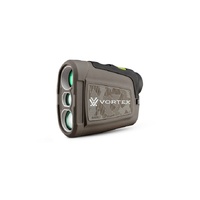
The maximum range listed (e.g., 1600m) typically refers to highly reflective targets like buildings or rocks under ideal conditions. In real-world hunting, animals (like deer or pigs) have fur that absorbs laser energy, reducing reflectivity. Therefore, the effective range for game is usually 60% - 80% of the stated maximum. We recommend choosing a model with a higher maximum range than your intended shooting distance to ensure reliability.
What is TBR (True Ballistic Range) technology, and why do I need it for mountain hunting?
When shooting at an uphill or downhill angle, gravity only acts on the horizontal distance of the bullet's path, not the line-of-sight distance. TBR (True Ballistic Range) technology uses a built-in inclinometer to measure the angle and calculates the "equivalent horizontal distance." This ensures you don't overshoot your target when hunting in steep terrain.
Why do some range finders feature both Red and Black displays?
This is for optimal visibility in changing light. Black reticles provide high contrast against bright, daylight backgrounds. However, during the "golden hours" (dawn or dusk) when most hunting occurs, a Red LED display is much easier to see against dark timber or shadows. Models with ActivSync™ technology can automatically switch between the two based on ambient light.
How does "Scan Mode" help in the field?
Scan Mode allows you to hold down the power button to get continuous, real-time distance updates as you pan across a landscape. This is extremely useful for tracking moving animals or identifying the exact gap between trees in a cluttered environment.
What specific features should bowhunters look for in a range finder?
Bowhunters should prioritize models with an Archery Mode or Flightpath™ technology. Beyond just slope compensation, these devices simulate the arrow's flight arc, warning you if there are overhanging branches or obstacles that might intersect your arrow's path, even if your line-of-sight is clear.
Is a higher magnification (e.g., 7x vs 6x) always better?
Not necessarily. While higher magnification (7x) helps you see smaller targets at long distances, it results in a narrower field of view and makes the image more susceptible to hand-shake. 6x magnification is considered the "sweet spot" for most hunters, offering enough detail while maintaining a stable, easy-to-steady image.
Can range finders see through rain, fog, or heavy brush?
Standard lasers can be reflected by water droplets or leaves, causing false readings. Look for models with Rain/Fog Mode or Last Target Priority. These features use advanced algorithms to ignore "noise" from the foreground (like rain or grass) and lock onto the strongest signal in the background.
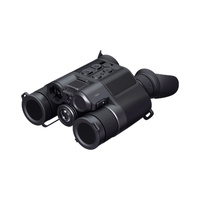
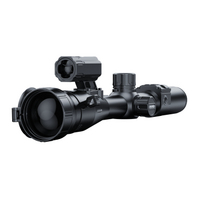
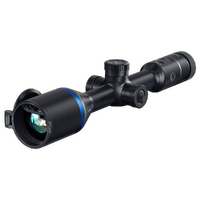
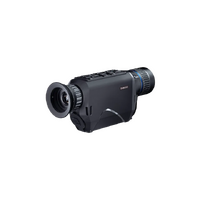
What are the advantages of Thermal Devices with integrated Laser Range Finders (LRF)?
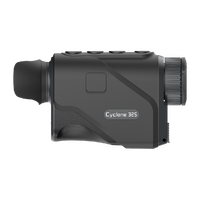
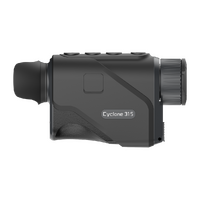
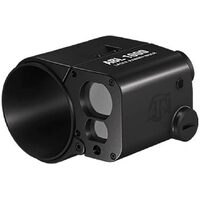
This is the ultimate setup for nighttime predator or pest control. While thermal optics allow you to spot heat signatures in total darkness, they lack "depth perception." An integrated LRF removes the guesswork, giving you the exact distance to your target in the dark to ensure an ethical and accurate shot.
What is "Applied Ballistics" (AB) integration?
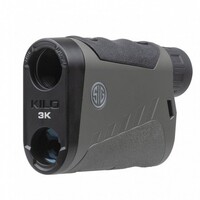
Premium range finders (like the Sig Sauer Kilo series) feature Applied Ballistics software that connects to your smartphone via Bluetooth. By inputting your specific caliber, muzzle velocity, and bullet weight, the range finder provides real-time Holdover and Windage corrections on the display, taking the math out of long-range precision shooting.
What waterproof rating is necessary for Australian hunting conditions?
An IPX4 rating is splash-proof and sufficient for light rain. However, for the rugged conditions often found in the Australian bush, we recommend IPX7 or higher. These units are fully waterproof and nitrogen-purged, preventing internal fogging when moving between temperature extremes (e.g., from a warm vehicle to a cold morning).