
Hunting Knives
Why is a "Full Tang" construction crucial for a hunting knife?
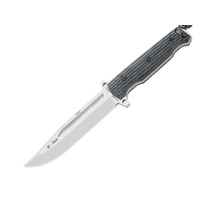
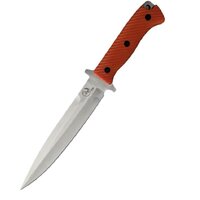
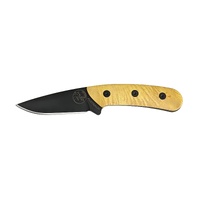
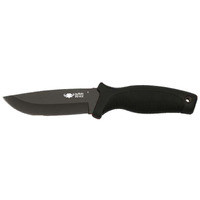
A Full Tang design means the steel of the blade extends all the way through the handle to the butt of the knife. This provides maximum structural integrity. When you are processing large game or performing heavy-duty tasks like prying joints or splitting a ribcage, a full tang knife is far less likely to snap or break at the hilt compared to partial tang or folding designs.
What is the specific purpose of the deep curve (Belly) on a Skinning Knife?
A dedicated skinning knife features a pronounced "belly" (a curved cutting edge). This design increases the total cutting surface area, allowing you to use long, sweeping strokes to separate the hide from the meat. The rounded tip is also intentional; it helps prevent accidental punctures of the hide or internal organs during the skinning process.
How do I correctly use the "Gut Hook" located on the spine of the blade?
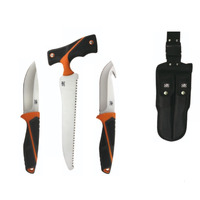
The gut hook is designed to work like a zipper. After making a small initial incision with the main blade, you insert the hook under the skin and pull it toward you. Because the sharp edge is shielded within the hook and faces outward, it allows you to open the abdominal cavity quickly without the risk of piercing the stomach or intestines.
What defines a "Pig Sticker" and how does it differ from a standard utility knife?
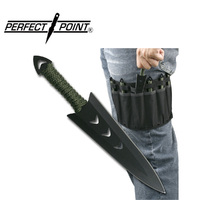
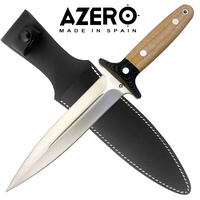
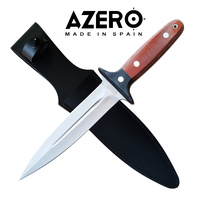
A "Pig Sticker" (such as those from the Spika or Azero range) is a specialized tool designed for the final dispatch of game. It typically features a long, narrow, double-edged blade (Spear Point) designed for maximum penetration. Unlike a utility knife meant for slicing, the Pig Sticker is balanced for a thrusting motion and has a reinforced tip.
Stainless Steel vs. High Carbon Steel: Which is better for Australian conditions?
The choice depends on your environment. Stainless Steel (like 440C or 7Cr17MoV) is highly recommended for coastal or humid hunting environments because it resists rust. High Carbon Steel offers superior edge retention, but it requires more maintenance, including immediate cleaning and light oiling after use to prevent corrosion.
Why is Micarta often used for high-end hunting knife handles?
Micarta is a durable composite material that is prized by hunters because it actually provides more grip when wet. Whether your hands are covered in water, mud, or blood during field dressing, Micarta maintains a high-friction surface, significantly reducing the risk of your hand slipping onto the blade.
Are folding hunting knives strong enough for field dressing?
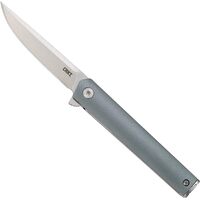
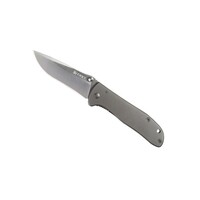
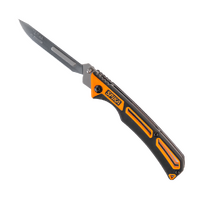
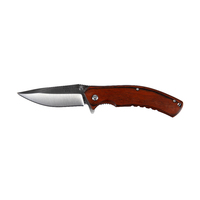
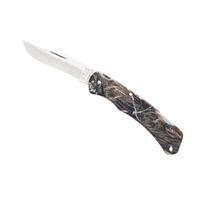
Modern folding knives equipped with heavy-duty Lockback or Liner Lock mechanisms are excellent for small to medium game. However, for "quartering" large game (breaking down elk or large deer), a fixed blade is still recommended as it has no moving parts that can fail or collect debris/bacteria in the hinge.
What is "Jimping" and how does it improve my cutting precision?
Jimping refers to the small, notched grooves on the spine of the knife near the handle. It provides a non-slip surface for your thumb or forefinger to rest on. This allows you to apply more downward pressure and achieve much finer control when performing delicate tasks, such as caping or deboning near joints.
What is the best way to maintain my knife after a successful hunt?
Wash your knife with warm, soapy water immediately after use and dry it completely. For long-term storage, do not keep your knife inside a leather sheath. Leather holds moisture and can cause "pitting" or rust over time. Store the knife in a dry place with a light coat of food-grade oil.
Which blade profile is the best "all-rounder" for a beginner hunter?
The Drop Point is the most versatile all-rounder. It features a strong, controllable point that is great for precision work, and enough of a curved "belly" to handle skinning tasks effectively. It is the gold standard for a general-purpose hunting knife.