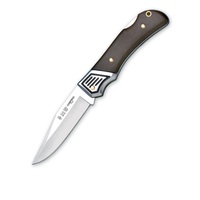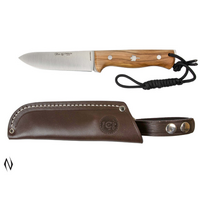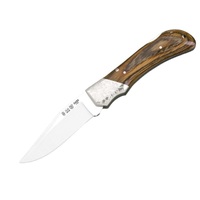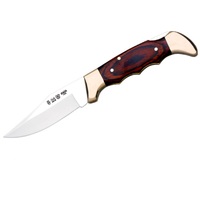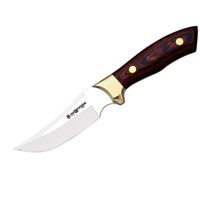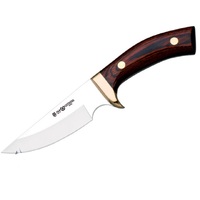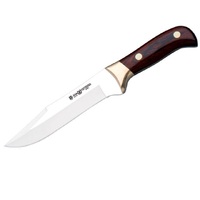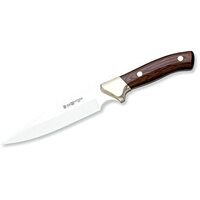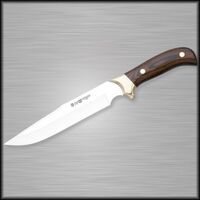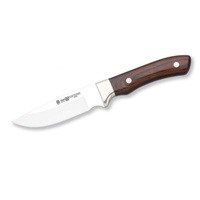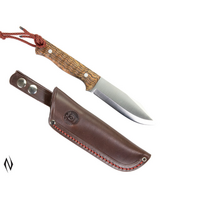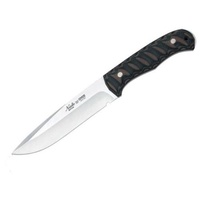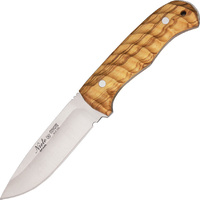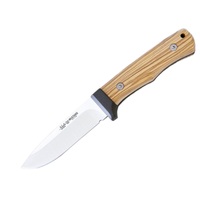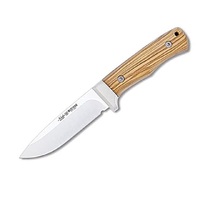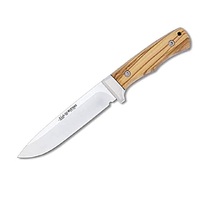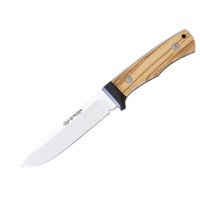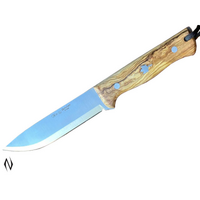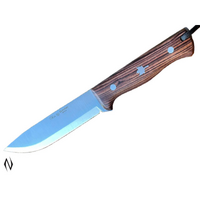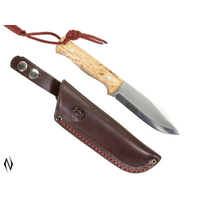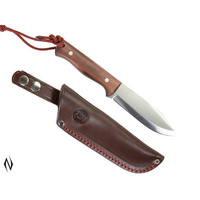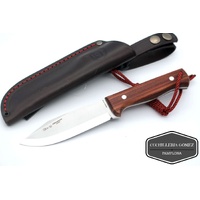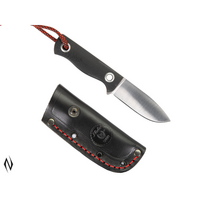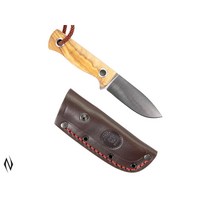

Fixed Blade Knives
Fixed blade knives are non-folding cutting tools featuring blades permanently secured to their handles. Designed without mechanical joints, they provide continuous structural rigidity and maximum strength for heavy-duty outdoor tasks, processing harvested game in the field, and handling demanding survival situations where folding mechanisms could fail under lateral pressure.
Types of Fixed Blade Knives
- Camp and survival fixed blades — Suit heavy outdoor processing, shelter preparation, and wood chopping because they feature robust blade stock and often incorporate integrated field accessories.
- Neck knives — Suit rapid-access everyday utility and light outdoor cutting because their compact frames sit securely under clothing or around the neck.
- Hunting and skinning fixed blades — Suit game dressing and animal processing because their specialised point profiles and continuous edges offer precise control around flesh and bone.
How to choose
- Blade length: Select a compact blade between 50mm and 75mm for intricate skinning and precise carving; step up to 100mm to 150mm for general outdoor utility; choose 230mm or longer when the blade must handle clearing tasks or light chopping.
- Overall length: Opt for compact profiles measuring around 100mm overall for discreet neck carry or restricted spaces; step up to 380mm overall when maximum leverage, striking reach, and heavy camp processing power are required.
How this differs from related categories
- Pocket Folding Knives: Fixed blades lack mechanical hinges or locks, providing a solid, single-piece structural design that withstands significantly higher lateral force.
- Tactical Knives: Fixed blades in this category prioritise edge geometry for general outdoor utility, camp craft, and game processing rather than combat-specific profiles.
- Throwing Knives: Standard fixed blades feature ergonomic, weighted handles and sharpened cutting bevels, whereas throwing knives use unsharpened bevels and neutral, balanced weight distributions for rotation.
Frequently Asked Questions
What is the advantage of a full tang construction in a fixed blade knife?
A full tang extends the blade steel continuously through the entire length and width of the handle scales. This eliminates weak connection points, allowing the knife to absorb heavy impact, batoning, and prying forces that would snap partial-tang or folding designs.
When should I choose a neck knife over a belt-sheathed fixed blade?
Neck knives feature ultra-compact blade lengths under 75mm and lightweight cord sheaths, making them ideal when weight reduction is critical or when a belt sheath interferes with backpack hip straps. Belt-sheathed fixed blades remain superior whenever extended cutting leverage or blade lengths exceeding 100mm are required.
How do I maintain the edge and steel on high-carbon fixed blade knives?
High-carbon blades require thorough drying after field use and a light application of mineral oil or protective wax to prevent surface oxidation. Sharpening is typically maintained with standard whetstones or ceramic rods set at a 20 to 25 degree angle per side.
Which sheath material is best for outdoor fixed blade carry?
Moulded synthetic sheaths like Kydex offer rigid friction retention and complete water resistance for wet field conditions. Traditional leather sheaths provide silent extraction and classic aesthetics but require regular conditioning to prevent moisture retention against the steel.