

How-to guide
Telos Battery Life and Charging: The LPS 7i Explained
It's a frosty July night, you're three paddocks from the ute, and the battery icon on your Telos has just turned red. That's when runtime starts to matter. The fix is simple: Pulsar rates every Telos at 7 to 8.5 hours on one LPS 7i battery at 22°C, the battery swaps in seconds, and a warm spare in your pocket covers the coldest night.
This guide covers how long each model runs, what shortens it, and the charging options. For choosing a model in the first place, see our Pulsar Telos buyer's guide.
How long each Telos runs
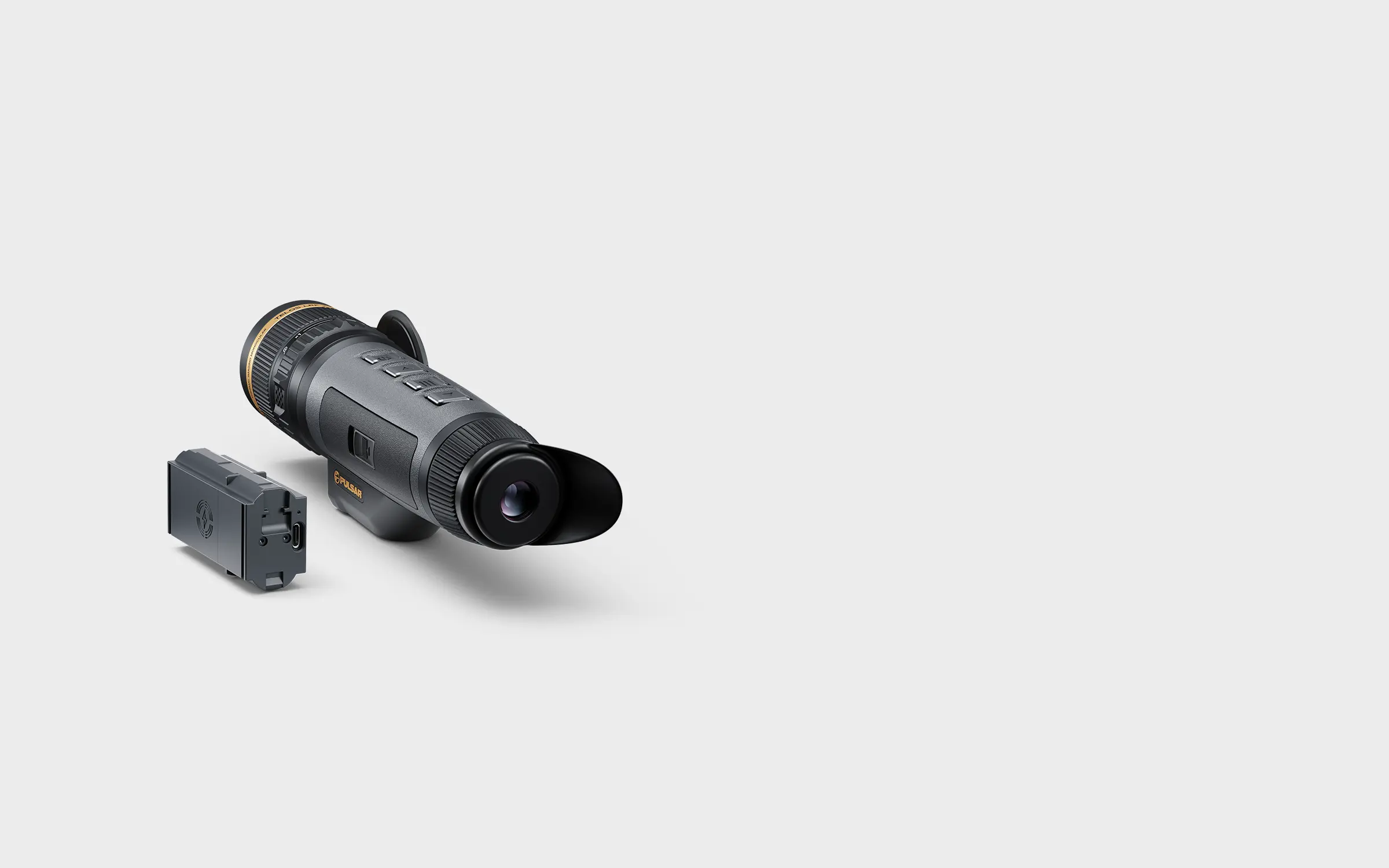
Every Telos uses the same battery, Pulsar's LPS 7i: a 6,400 mAh lithium-ion pack weighing 0.13 kg. Rated runtime differs by model, as the chart below shows.
The 640 and 384 models lead at 8.5 hours. The LRF XT50 is rated at 8 hours and the XL50 at 7. Pulsar doesn't break down why, but we'd expect the larger sensors and the processing behind them to draw more power. By our calculation from the pack's 3.7 V rating, the LPS 7i stores about 23.7 Wh, so an 8.5-hour rating means an average draw of under 3 W.
What shortens it
Pulsar's figures are measured at 22°C. Three things will bring them down in the field.
Cold. Lithium-ion batteries deliver less of their stored energy when they're cold, so expect less on a frosty night. The Telos is rated to operate down to −25°C, so it'll keep working, just for less time. Wi-Fi and recording. Streaming to Stream Vision 2 and recording video both add load; switch Wi-Fi off when you're not using the app. The rangefinder and screen. Continuous ranging and a bright display draw extra power too.
None of this is unusual for a thermal, and it's why we'd always carry a spare.
Charging and power options
The LPS 7i is more flexible than most thermal batteries. The chart below sums up the options.
Pulsar says the LPS 7i supports USB Power Delivery fast charging when you use its standard charging set, a USB-C cable and power adapter. It also supports wireless charging, so a charging pad on the kitchen bench or in the car tops it up without plugging in. Pulsar lists the Telos's external power input as 5 V or 9 V over USB-C, which is what makes a USB-C power bank or a vehicle USB-C socket useful on a long sit.
A plan for cold nights
On a winter fox night, battery management is mostly habit. The plan below is what we'd follow.
Keep the spare in an inside pocket, close to your body, so it starts warm. Swap when the indicator drops rather than waiting for it to die mid-scan, and put the cold battery back in your pocket; it may recover a little as it warms. Pulsar's LPS 7i is also used by its Trail 3 riflescopes, so if you run both, the batteries are interchangeable.
If you hunt mostly in close country where you won't be out all night, the 8.5-hour XQ35 or XP50 on one battery will cover most outings. If you're choosing the LRF XT50 or an XL50 for long glassing sessions, budget for a spare from the start. For steady long sits, our guide to Telos mounts covers tripods and vehicle use.
Shop the Pulsar Telos range
Check current prices and stock, or contact us about spare LPS 7i batteries.
View all Telos modelsTelos Battery FAQ
Which Telos model has the longest battery life?
The Telos XQ35, XP50 and XG50, with or without a rangefinder, share the longest rating: up to 8.5 hours on one LPS 7i battery at 22°C, according to Pulsar. The LRF XT50 is rated at 8 hours and the XL50 models at 7 hours. All use the same replaceable LPS 7i pack.
What battery does the Pulsar Telos use?
Every Telos uses Pulsar's LPS 7i rechargeable lithium-ion battery, model 79187. Pulsar lists it at 6,400 mAh, 0.13 kg and 79 × 31 × 43 mm. It's replaceable in the field, supports USB Power Delivery fast charging with Pulsar's charging set, and supports wireless charging. Pulsar's Trail 3 riflescopes use the same battery.
Can I charge the Telos battery wirelessly?
Yes. Pulsar says the LPS 7i battery used in the Telos supports wireless charging, as well as fast charging through USB-C with Power Delivery when using Pulsar's standard charging set. Wireless charging is handy for topping up on a bench or in a vehicle without plugging in a cable.
Can I run a Pulsar Telos from a power bank?
Pulsar lists the Telos's external power supply as 5 V or 9 V through USB-C with Power Delivery, so a USB-C power bank or vehicle USB-C socket can supply it. That's useful on a long sit or when scanning from a vehicle. For walking, a spare LPS 7i is lighter and quicker than carrying a power bank and cable.
Does cold weather reduce Telos battery life?
Yes. Pulsar's runtime figures are measured at 22°C, and lithium-ion batteries deliver less of their stored energy in the cold. The Telos is rated to operate from −25°C to +40°C, so it keeps working on frosty nights, but for less time. Carry a spare in an inside pocket to keep it warm.
Can I take a spare LPS 7i battery on a plane?
By our calculation, the LPS 7i stores about 23.7 Wh, based on Pulsar's 6,400 mAh and 3.7 V figures. That's well under the 100 Wh level airlines commonly use for spare lithium batteries in carry-on luggage. Spare batteries generally go in your cabin bag, not checked luggage, but always check your airline's rules.
How do I fast charge the Telos battery?
Pulsar says the LPS 7i supports USB Power Delivery fast charging when charged with its standard charging set, a USB-C cable and power adapter. A PD-capable adapter is the key; a basic USB charger will charge more slowly. Charge at moderate temperatures, and dry the battery contacts after a wet night first.
Why does the Telos XL50 run for less time than the XP50?
Pulsar rates the XL50 at 7 hours and the XP50 at 8.5 hours on the same LPS 7i battery, without explaining the difference. We'd expect the XL50's larger 1024×768 sensor and the processing behind it to draw more power. If you choose an XL50 or XT50 for long sessions, plan on carrying a spare battery.
How many batteries do I need for a Telos?
For most hunters, two: the one in the unit and a spare. A single LPS 7i is rated at 7 to 8.5 hours at 22°C depending on the model, which covers many outings, but cold, Wi-Fi and recording shorten it. A warm spare in your pocket covers a full winter night without stopping to charge.
Battery and runtime figures come from Pulsar's published specifications; energy and power figures are our own calculation.